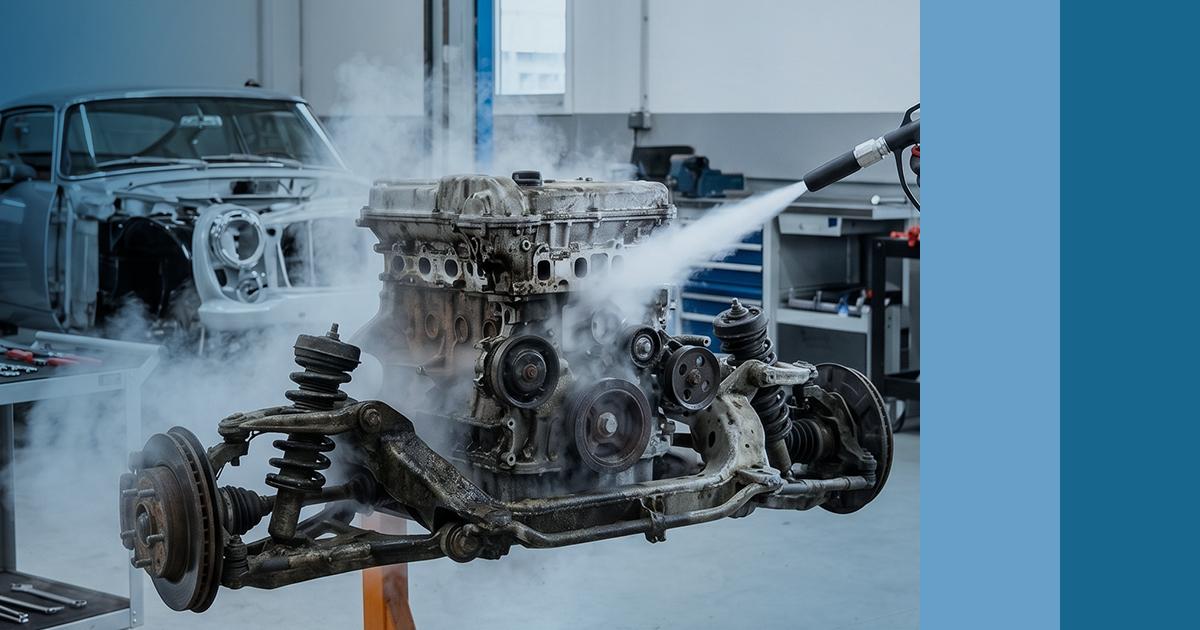
The ecological transition is not just about the energy we use, but also about how we maintain our plants. For decades, the industry has relied on aggressive petrochemical solvents, acids, or systems with very high water consumption to degrease and clean production lines. Today, these practices have become unsustainable, both for regulatory reasons and due to the increasing costs of hazardous waste disposal.
Cryogenic sandblasting with dry ice represents one of the most effective solutions for aligning maintenance operations with ESG (Environmental, Social, and Governance) standards.
1. Elimination of toxic chemical substances
Dry Ice Blasting completely replaces the use of chemical solvents. This means zeroing the risk of toxic spills, eliminating VOC (Volatile Organic Compounds) emissions in the workplace and, above all, cutting the disposal costs of polluting wastewater at the root.
2. Absolute water savings
Hydro-blasting or steam cleaning consumes thousands of liters of drinking water, which immediately becomes wastewater to be treated. Cryogenic cleaning is a 100% dry process. Not a single drop of water is wasted or polluted during the intervention.
3. $CO_2$ circularity
A common myth is that the use of dry ice (solid $CO_2$) contributes to the greenhouse effect. In reality, the dry ice used for industrial cleaning is a byproduct. The $CO_2$ is captured from other industrial processes (such as bioethanol or ammonia production), purified, and reused. No "new" carbon dioxide is created; instead, existing $CO_2$ is given a second life before being released, making the process carbon neutral.
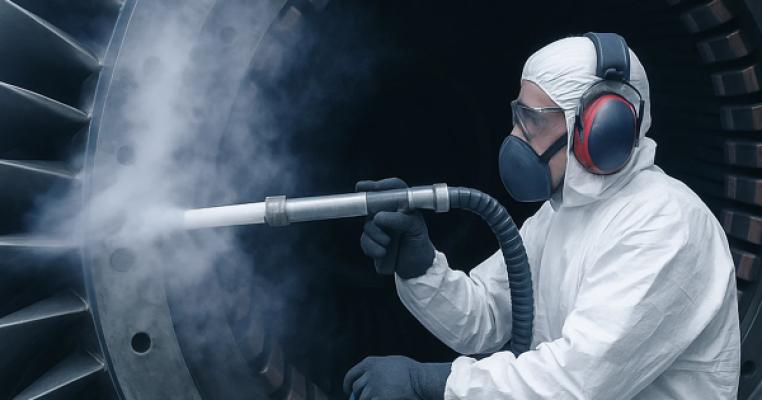
4. Safety for operators
The absence of toxic fumes, flammable solvents, and secondary abrasive dust (typical of traditional sandblasting) creates a drastically safer and healthier work environment for maintenance operators.
Choosing cryogenic technology means investing in maintenance that protects machines, people, and the planet.